To Achieve More, or to Need Less?
"...this dogged pursuit of material goods is a slippery slope to excess and betrayed expectations; discerning between wants and needs is a daily challenge with decades-long implications."


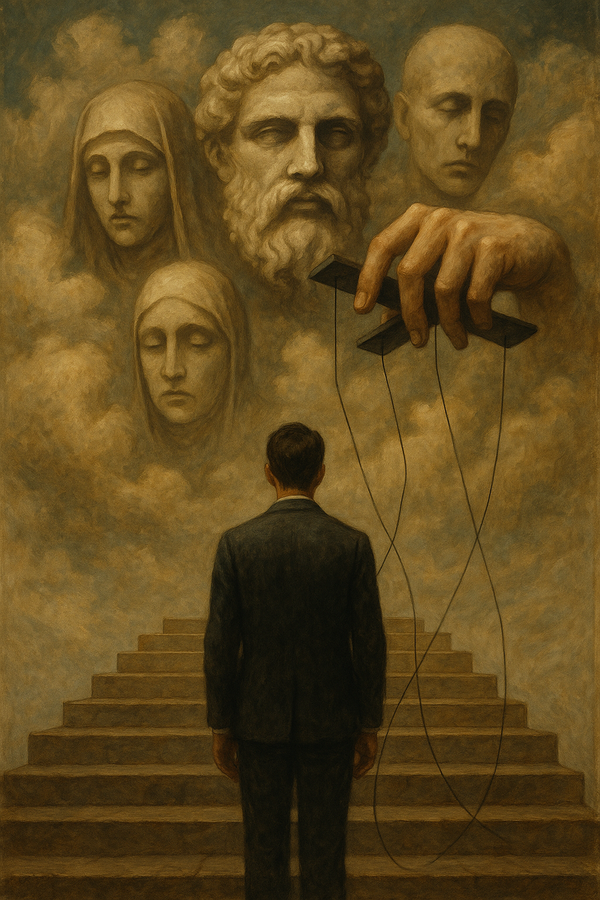
That is the question that feeds all questions of intention. We can make more money, get more power; or save better and be content with less. Popular Western culture advocates improving our material means to match our needs; what if we simply modify our needs to match our means?
Material comforts fill a void that would otherwise beget discomfort, or, so we fear when we unabashedly pursue material gain. Much of this pursuit could be considered practical when we raise a family or care for elderly relatives; we want our family and friends to have more than they need. For ourselves, however, this dogged pursuit of material abundance is a slippery slope to excess and betrayed expectations; discerning between want and need is a daily challenge with decades-long implications.
An opaque boundary between sufficiency and excess rests hidden within every goal-seeking decision. Many bodily functions are needs whose direct mechanical operation we don't control nor have any intentional sway over, such as digestion and immune function. Other functions, however, like sex present as needs but are really just powerful wants whose boundaries we can never find. Food, of course, is where the boundary is characterized by ambiguity. Fine dining and fast food both provide equal opportunity for overindulgence and macronutrient imbalance.
What of security though? Is an alarm system a need or a want? Functioning locks are arguably necessities for family homes, but not having them does not immediately predicate fatality. Wealth, such as in the form of security, is a risk mitigator and risk is also a grey area. With enough money, one can install advanced security systems, hire physical security guards, and build bomb shelters. One can also protect his or her life materially with a robust investment portfolio and life insurance policy. In this case, money is not an indulgence but a means of protection and a worthy pursuit for anyone responsible for the caretaking of others.
Money is axiomatically neither a want nor a need. Wealth and power bring freedom, and freedom brings choice - the choice to build a business, start a charity, or volunteer at your local goulash kitchen. One can be permitted indulgences when the consequential net value of their actions to society, however defined, is positive, right?
Hidden within this perspective that more money is good is an insidious fatalism that disregards the power of the mind. This position essentially concedes that our mental contentment is not just aided by, but depends on our procurement and consumption of things that we... need. To an extent, this is of course true but it doesn't help us answer whether our proposed needs are actually just wants in needs' clothing. Money gives you the ability to escape a bad political and economic environment, an abusive marriage, or a miserable occupation. Sometimes the determination is clear, but most of the time it isn't.
Determining where this boundary between excess and necessity lies is at the core of our search for purpose. Meaning is found in setting goals and working towards them. It's about the journey, not the destination, but how we define and navigate that journey depends on our current state of
wants and needs.